Your home isn’t just a place to crash—it’s actively shaping your mood, stress levels, and how your brain functions daily. Color, lighting, and clutter all send signals to your nervous system. Bright natural light boosts focus; dim spaces drain energy. Cool blues calm you down; warm oranges energize. Clutter spikes stress hormones, while organized zones lower mental load. Strategic design choices—from paint color to furniture placement—directly affect how you feel and think. Stick around to discover exactly which adjustments help your space support productivity and wellness.
How Your Home’s Design Shapes Your Nervous System
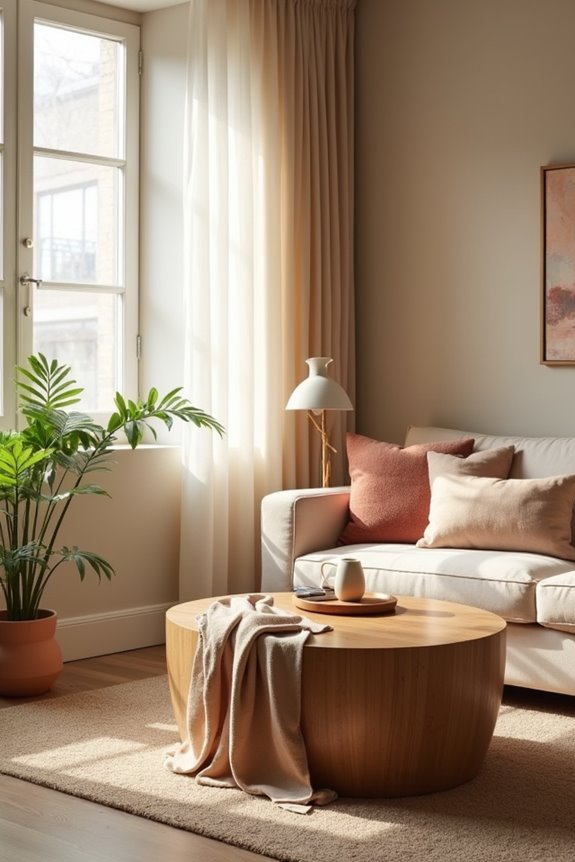
When I first learned that my apartment’s dingy lighting was literally affecting how my brain worked, I’ll admit—I was skeptical. But environmental psychology changed everything for me. Here’s what I discovered: my home’s design directly influences my nervous system. That dim corner? It was tanking my serotonin and energy levels. I swapped it with brighter, natural light and felt more motivated. Colors matter too. I painted my bedroom soft blue, and suddenly I wasn’t tossing around at night. My living room got warm yellows, and I actually wanted to spend time there. Even textures play a role—I added plush fabrics and wood elements, which calmed my stress response. Your space isn’t just decoration; it’s affecting how you feel and think every single day.
The Science of Color: What Calms and What Energizes
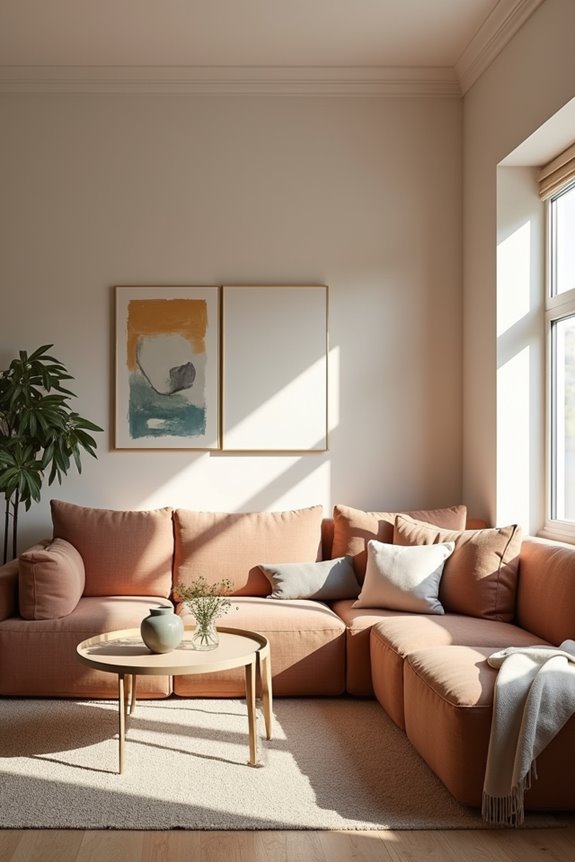
Ever notice how you feel different in a blue room versus a red one? That’s color psychology at work. I’ve discovered that cool blues and greens calm my nervous system—they’re soothing and peaceful. Warm reds and oranges boost my focus and make me feel more energized. Here’s what I’ve learned: lighter, softer blues reduce my stress, while bright, saturated reds quicken my heartbeat and grab my attention. The trick is matching colors to what you need. Want to relax after work? Paint your bedroom a mellow blue. Need motivation in your home office? Try a warm orange accent wall. Lighting matters too—natural daylight makes cool colors even more calming.
Lighting’s Hidden Power Over Mood and Productivity
How much consideration have you actually given to the lights in your home? I didn’t either, until I realized how much they were affecting my mood and focus. Here’s the thing: lighting isn’t just functional—it’s powerful. Bright lighting energizes me during work hours, while dimmer light helps me wind down at night. I’ve learned that natural light keeps my circadian rhythm healthy, though I need shades to prevent stress from too much exposure. Now I adjust my lighting’s color temperature throughout the day. Warmer tones calm me down, cooler ones sharpen my focus. My lighting fixtures also became design statements that express who I am. By being intentional about lighting, I’ve changed how I feel in my own space.
Why Clutter Drains Your Mental Energy
While I’ve gotten better at managing my lights, I’ve realized that all the perfect lighting in the world won’t help if I’m surrounded by stuff everywhere. Here’s what I discovered: clutter isn’t just annoying—it actually stresses out my brain.
Those piles of laundry and scattered items keep my mind constantly reminding me of unfinished tasks. My body stays in stress mode, and my cortisol levels stay elevated. I couldn’t relax after work, no matter how hard I tried.
So I started small. I’d hang up coats immediately. I’d unload laundry right away. These quick habits prevented clutter from building up in the first place.
The difference was noticeable. My space felt calmer, and honestly, so did I. Turns out, a clearer space means a clearer, less stressed mind.
Creating Spaces That Support Your Daily Routines
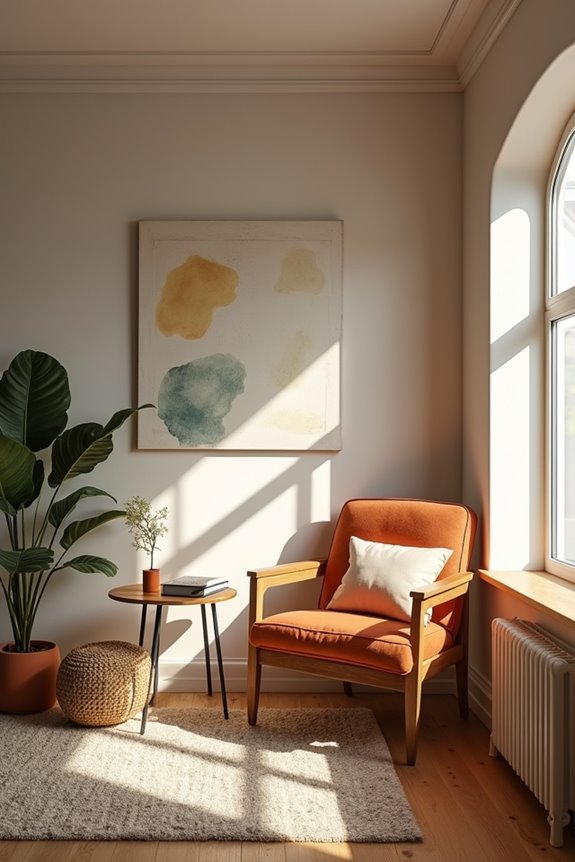
- Lighting matters: I combined natural daylight with adjustable lamps, and mornings felt easier while evenings became calmer
- Colors influence energy: Cool blues help me focus during work, while warm yellows energize my cooking time
- Organization reduces friction: Clear zones for different activities mean I’m not mentally exhausted finding things
When I arranged my furniture flexibly and added artwork that matters to me, transitions between tasks felt smoother. I wasn’t constantly fighting my environment anymore. My space became a partner in my routine, not an obstacle. That’s when I realized: thoughtful design isn’t about perfection—it’s about creating a home that genuinely supports *you*.
Natural Elements and Biophilic Design for Stress Relief
Ever notice how you feel calmer near plants or sitting under trees? That’s biophilic design at work—and it’s not just your imagination. When I bring nature indoors through monstera plants and wooden furniture, my stress literally drops. The science backs this up: trees release phytoncides that boost immunity and ease anxiety. I’ve found that earth-toned walls, soft textures like wool and jute, and nature-inspired artwork soothe my brain. Adding greenery to my bedroom lowered my cortisol levels noticeably. Even strategic daylight and softer shadows help me focus better without eye strain. You don’t need a forest in your living room—just thoughtful natural touches create spaces where you actually want to be. Your home becomes your sanctuary.
Furniture Layout and Flow: Reducing Friction in Daily Life
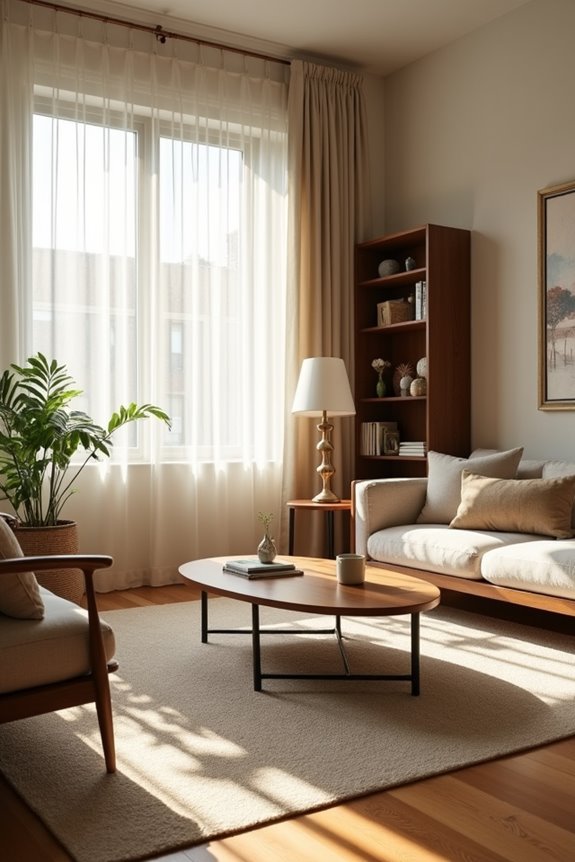
Once your space feels calm and grounded with natural elements, it’s time to think about how you actually move through your home. I’ve learned that thoughtful furniture arrangement reduces friction in ways you don’t always notice.
When I arrange my rooms intentionally, I create natural traffic patterns that match how I actually live:
- Clear pathways that let me move freely without stubbing my toes on forgotten chairs
- Defined zones for different activities, which helps my brain settle into focused work or relaxation
- Flexible seating that shifts easily for conversations or solo time
The real benefit happens when flow becomes effortless. I balance open spaces with cozy nooks, ensuring every corner serves a purpose. This thoughtful layout isn’t just practical—it creates an environment where I genuinely want to spend time.
Designing for Different Needs: Sensory and Accessibility Considerations
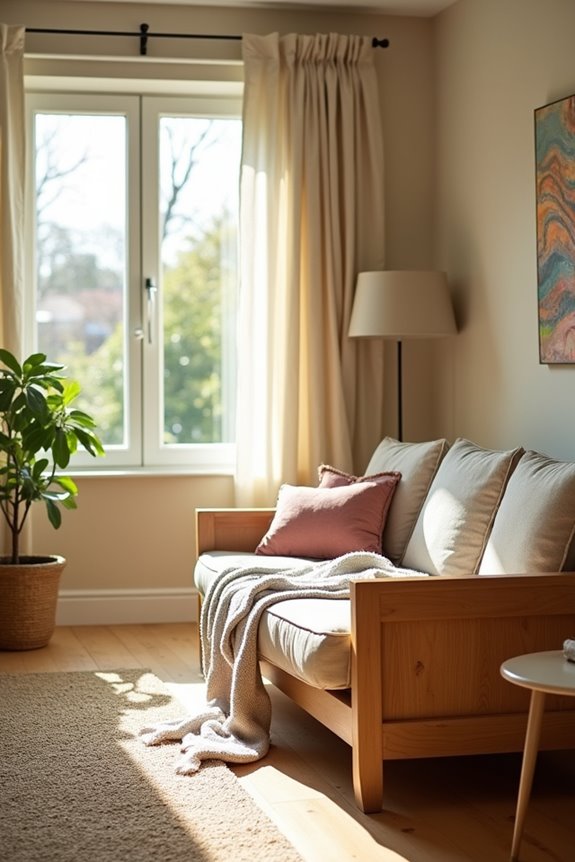
What if the same lamp that makes your friend feel cozy actually makes you want to crawl out of your skin? I get it. Our homes need to work for *us*, not against us.
That’s why I’ve started thinking about sensory design. I control my lighting’s brightness and warmth—softer in evenings, brighter when I need focus. I’ve added felt panels to quiet echoing rooms because constant noise drains me emotionally.
I use flexible furniture I can rearrange when my needs shift. Soft blues and greens calm my nervous system, while warm accents provide energy without overwhelming me.
Clear pathways mean I’m not constantly problem-solving where to walk. It sounds small, but these choices let me feel safe and capable in my own space.
Personal Artifacts and Memory: Why Your Home Reflects You
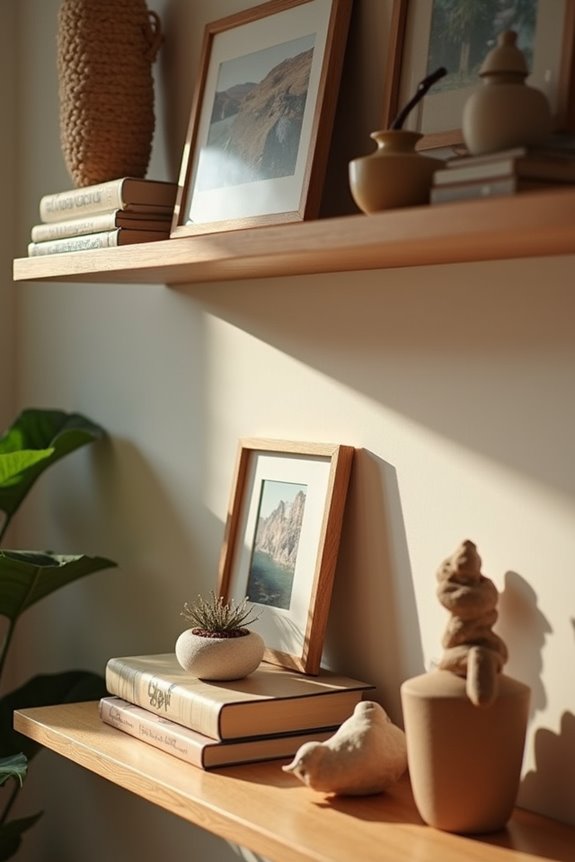
Why do I keep that chipped mug from my grandmother’s kitchen, even though I have perfectly good ones? Because personal artifacts tell my story. They’re the visual diary of who I am.
When I display meaningful pieces around my home, I’m creating anchors that connect my past to today. These objects—photographs, heirlooms, artwork—aren’t just decoration. They’re memory markers that make my space feel genuinely mine.
Here’s what personal artifacts do for me:
- Reinforce my daily routines through familiar touchstones
- Guide me intuitively through my home by reducing mental clutter
- Express my identity and values without saying a word
That chipped mug reminds me of Sunday mornings with her. It belongs here, imperfect and treasured, because my home shows who I really am—memories and all.
Strategic Organization to Lower Cognitive Load
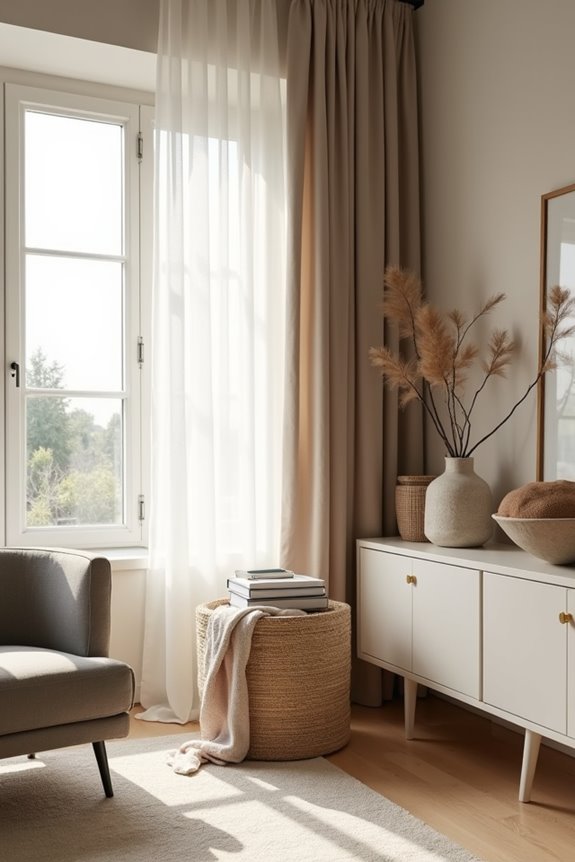
My grandmother’s mug means the world to me, but here’s the thing—it doesn’t matter how much I love it if I can’t find a clean spoon in the morning.
That’s when I realized organization isn’t boring—it’s mental relief. When I created zones in my kitchen, labeled my drawers, and assigned homes for everything, my stress dropped noticeably. I stopped hunting for things and started actually enjoying my space.
| Zone | Purpose |
|---|---|
| Cooking station | Prep and cook meals |
| Clean-up corner | Dishes and supplies |
| Coffee bar | Morning routine |
| Pantry | Food storage |
Clear pathways mean fewer decisions. Less visual noise means lower cortisol. I’m not just organizing; I’m protecting my peace. That’s what matters.
Adaptive Spaces That Evolve With Your Life
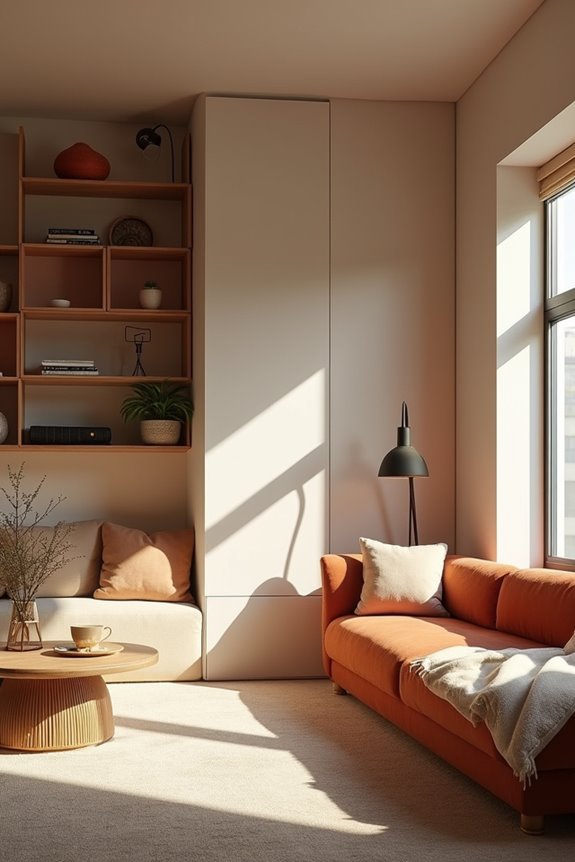
How often do you rearrange your bedroom, only to realize six months later that the layout doesn’t actually work anymore? I’ve learned that my home needs to grow with me, not against me. That’s where adaptive interior design comes in—spaces that actually work with your changing life instead of fighting it.
I’m talking about furniture and layouts that shift when I do:
- Modular shelving that expands when I acquire more books or contracts when I declutter
- Movable partitions that let me reconfigure rooms as my routines evolve
- Adjustable lighting that adapts to my mood and tasks throughout the day
The Connection Between Environment and Social Well-being
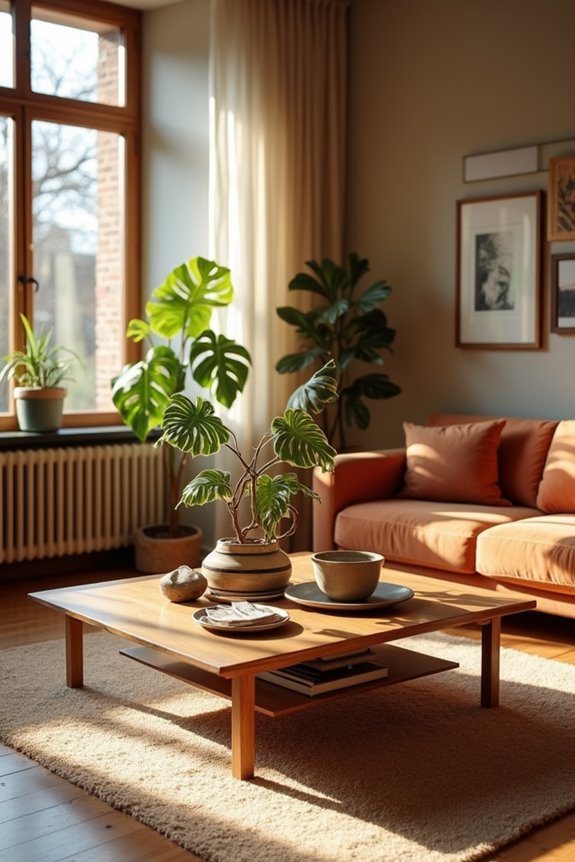
When I finally realized how much my living room’s layout affected whether my friends actually hung out there, I understood that design isn’t just about looking good—it’s about building real connections with the people you live with and invite over. The way I arranged furniture, chose calming colors, and added lighting that didn’t feel clinical made conversations easier and kept everyone from feeling cramped or stressed. I’ve learned that when your space actually supports how you want to live and relate to others, you’re not just decorating; you’re creating an environment where people naturally feel welcome.
Social Connection Through Design
Ever notice how you’d rather hang out in some rooms than others? I’ve realized that thoughtful design actually shapes how we connect with family and friends. When I arrange furniture to encourage eye contact and easy movement, conversations flow easily. Suddenly everyone wants to gather there.
Here’s what I’ve discovered works:
- Flexible layouts that adapt to different group sizes help me reduce anxiety about hosting, since I’m not stuck with one rigid setup
- Outdoor seating on my porch creates intimate spaces where deeper conversations happen without feeling forced
- Clear pathways throughout my home make daily interactions smoother and less awkward
The truth is, intentional arrangement removes friction from our days. When spaces feel welcoming and accessible to everyone, we naturally spend more time together. That’s where real belonging grows.
Spaces That Foster Belonging
Why do I feel more like myself in some rooms than others? It’s because certain spaces actually invite me to connect—with others and myself. When I arrange furniture to face each other, I’m not just positioning chairs; I’m saying “let’s talk.” Calm colors and nature touches settle my nervous system, making conversations feel easier. I’ve learned that flexible furniture lets me adapt spaces for different gatherings, reducing that awkward shuffle-around feeling.
| Design Element | What It Does |
|---|---|
| Conversation-facing layouts | Encourages eye contact and closeness |
| Flexible seating | Adapts to any group size |
| Calm colors & nature | Reduces anxiety, builds warmth |
| Clear spatial flow | Helps people relax and engage |
These aren’t fancy tricks—they’re honest ways I’ve created rooms where belonging actually happens.
Environment’s Role In Relationships
As I’ve rearranged my living spaces over the years, I’ve noticed something remarkable: the rooms themselves actually shape how I connect with the people in them.
When I position furniture to encourage eye contact and conversation, my family naturally gravitates toward genuine interactions. Here’s what’s changed my home life:
- Layout matters: Clear, intuitive arrangements reduce daily friction, giving us uninterrupted time together
- Sensory touches help: Plants and natural materials noticeably calm my mood, creating space for better exchanges
- Sound management counts: Soft surfaces absorb noise, preventing the overwhelm that derails conversations
I’ve realized that good design isn’t superficial—it directly impacts my mental health and relationships. Flexible seating lets us adapt gatherings effortlessly. By thoughtfully arranging my space, I’m building an environment where belonging happens naturally.
Transform Your Space Into a Restoration Retreat
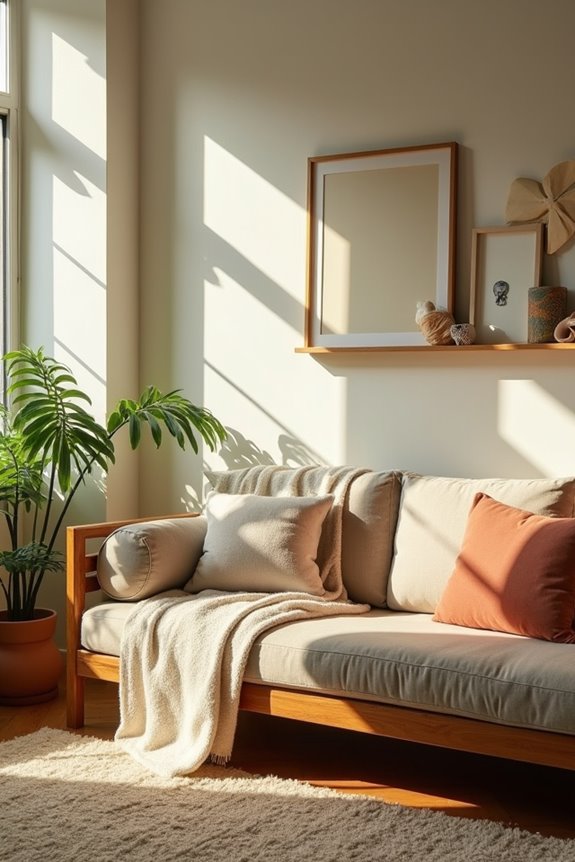
What if your home could actually help you feel better? Creating a restoration retreat isn’t complicated—it’s about smart choices that calm your mind and body.
Natural light lifts my mood instantly, while cooler blues and greens in my space promote genuine relaxation. Reducing clutter dramatically decreased my stress more than I’d expected. Adding plants and wood textures brought nature indoors, making everything feel more peaceful.
| Design Element | Impact | Action |
|---|---|---|
| Natural Light | Boosts mood | Position seating near windows |
| Cool Colors | Promotes calm | Paint accent walls blue/green |
| Plants | Reduces stress | Add 3-5 low-maintenance plants |
| Soft Textures | Minimizes overload | Layer rugs and felt panels |
| Decluttering | Lowers anxiety | Remove 30% of visible items |
Softening floors with carpet and adding acoustic panels completes the foundation. Your home should work for you, not against you.