
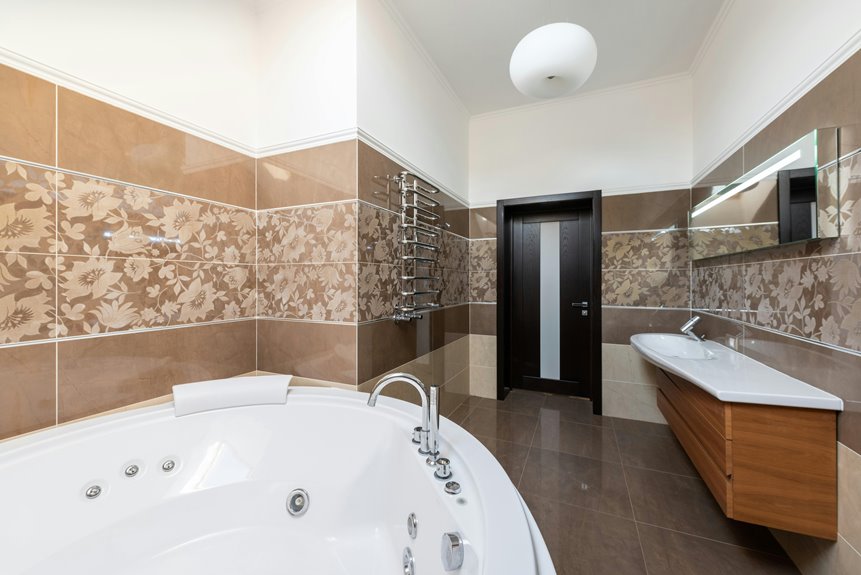
I’ll be honest—bathroom decoration costs me anywhere from £5,000 to £30,000 depending on what I’m doing. A small refresh with new paint and fixtures runs £5,000–£10,000, while mid-range upgrades hit £14,000–£20,000. High-end finishes? That’s £30,000-plus. Labor typically accounts for 40–65% of my budget, with materials covering the rest. The real cost jumps happen when I touch plumbing or electrical work. Stick around to discover exactly where your money goes.
Bathroom Decoration Costs: What’s Actually Included
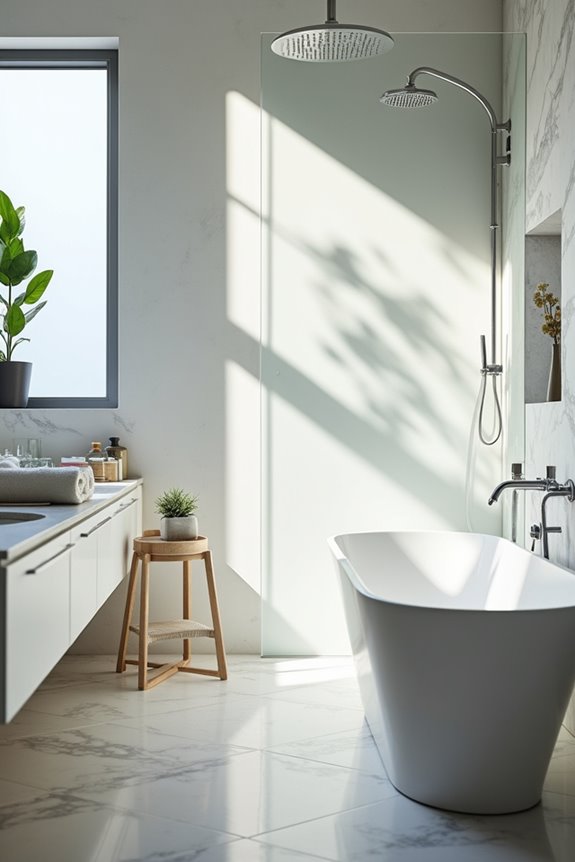
Ever wonder where all your bathroom decoration budget actually goes? It breaks down into two main buckets: materials and labor. Your cost for fixtures—like vanities, faucets, and mirrors—plus finishes such as tile choices really matters. Premium tiles versus standard ones? That’s a significant difference in your wallet. Here’s the thing though: labor typically accounts for 40-65% of your total budget. Installation, plumbing work, and demolition aren’t cheap. The remaining 35-60% covers your actual materials. You could trim expenses by refinishing existing vanities or painting over tiles instead of replacing them. Smart storage solutions also help avoid costly plumbing changes. Understanding these breakdowns helps you make smarter choices without sacrificing quality.
Average Prices by Project Scope
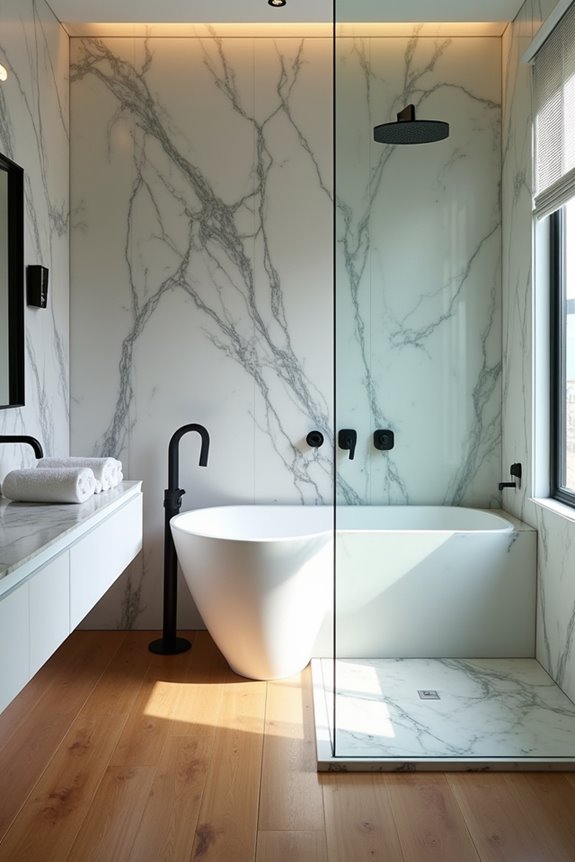
Now that you know where your money actually goes, let’s talk real numbers. I’ve found that bathroom remodel costs vary widely depending on your project scope. A small refresh runs about £5,000 to £10,000—ideal if you’re just updating fixtures and keeping the layout the same. Mid-range projects land around £14,000 to £20,000, which is where you’d add new flooring, upgraded fixtures, and maybe a fresh vanity. Then there’s the luxury route. Master bathrooms start at £30,000 and climb higher with premium fixtures and custom features. Honestly, the biggest cost jumps happen when you modify plumbing or electrical work. The scope you choose really determines whether you’re spending thousands or tens of thousands.
Does Bathroom Size Really Change the Cost?
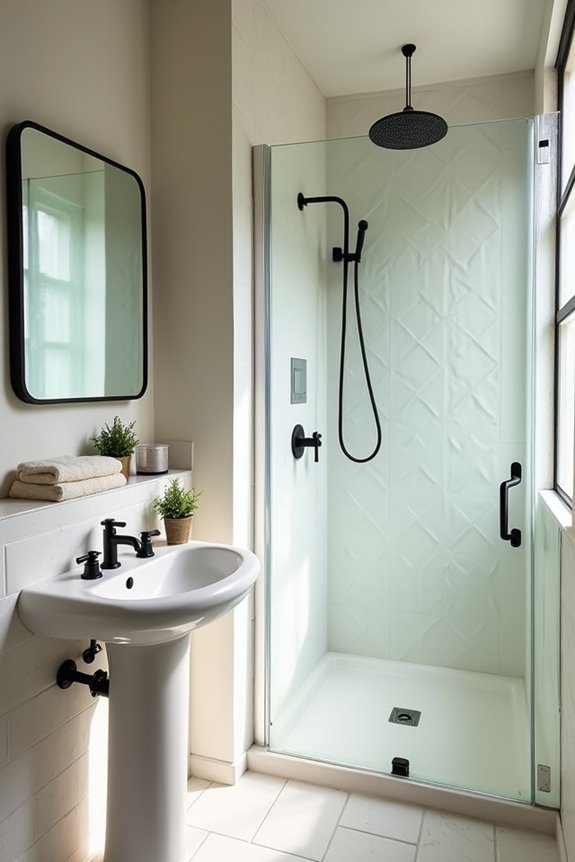
Does Bathroom Size Really Change the Cost?
Bigger bathrooms cost more to renovate, and it’s not just because you’re being charged extra for no reason. Size impacts your bathroom remodel expenses because larger spaces demand more materials, labor, and fixtures.
| Bathroom Size | Cost Range |
|---|---|
| Small | $5,000–$10,000 |
| Medium | $10,000–$20,000 |
| Large Master | $30,000+ |
When looking at cost per square foot, basic finishes run $70–$120/sq ft, while upgraded fixtures and finishes jump to $120–$200+/sq ft. Plumbing and electrical work adds to expenses in bigger bathrooms. You’re paying for additional tile, vanities, and potentially relocated pipes. A small powder room remodel costs significantly less than the master bath down the hall because you’re simply using fewer materials overall.
Materials and Fixtures: Where Your Budget Actually Goes
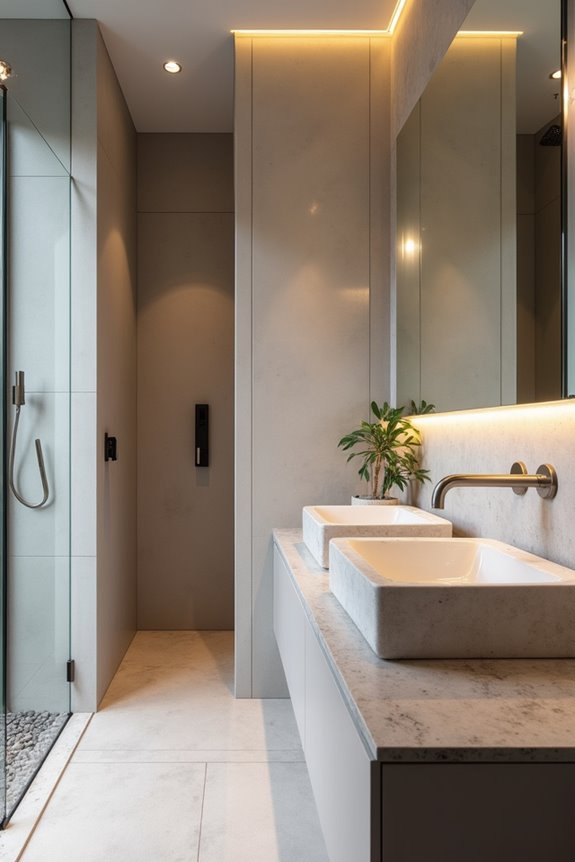
I’ve learned the hard way that your fixture choices and material quality will directly affect your bathroom budget, so let me walk you through where your money actually goes. When I started planning my own bathroom, I realized that picking between a basic ceramic tile ($2–$5 per square foot) and natural stone ($10–$20 per square foot) significantly impacted my costs, plus my faucet choice could range anywhere from $100 to $800 depending on whether I wanted something simple or designer. The strategy I discovered is that mid-range materials—like cultured marble countertops instead of solid granite, or quality ceramic instead of premium porcelain—provide durability and style while staying within budget.
Fixture Selection And Pricing
Where does your bathroom renovation budget actually go? I’ll be honest—fixture costs surprised me. Basic faucets run cheap, but designer taps cost significantly more. I learned that vanities and cabinets eat up a huge chunk of money. I went with prefabricated instead of custom, which saved me plenty.
Then there’s tile. Ceramic is affordable, but stone and solid surfaces cost way more. I picked ceramic and didn’t regret it.
Here’s what I discovered: investing in quality plumbing fixtures prevents headaches later. Sure, reliable brands cost more upfront, but I avoided expensive repairs. That’s peace of mind I’m actually using. You’re choosing between paying now or paying more later. I chose now.
Material Quality Versus Budget
Once you’ve picked out your fixtures, the real cost question hits you: do you go budget-friendly or splurge for quality? I’ve learned that material quality dramatically shapes your bathroom remodeling budget. Real stone tile costs way more than basic ceramic, but it’ll last longer and look excellent. Premium fixtures like frameless glass showers and designer taps add serious money to your tab. Here’s the thing though—labor costs climb alongside material quality since skilled installers charge more for tricky installations. Custom vanities beat standard ones for storage and fit, yet they’ll stretch your budget further. I won’t lie: I’ve wrestled with these choices plenty. The sweet spot? Pick one or two premium elements you’ll genuinely appreciate, then keep other areas budget-conscious.
Why Labor Costs Are Half Your Bill
Most bathroom remodels hit your wallet hard because you’re really paying for skilled people’s time and expertise, not just materials. I learned this the hard way—labor typically eats up 40 to 65 percent of your total budget, depending on where you live and what you’re tackling.
Here’s why: plumbing and electrical work demand licensed professionals and permits, which costs serious money. When I relocated my fixtures and upgraded my wiring, those labor hours added up fast. Demolition alone takes days of physical work. Then comes installation of everything from tiles to lighting.
You’re basically paying for knowledge and experience that prevents costly mistakes. It’s the unglamorous work—the sweat and skill—that really shapes your final bill.
Hidden Decoration Costs You’ll Encounter
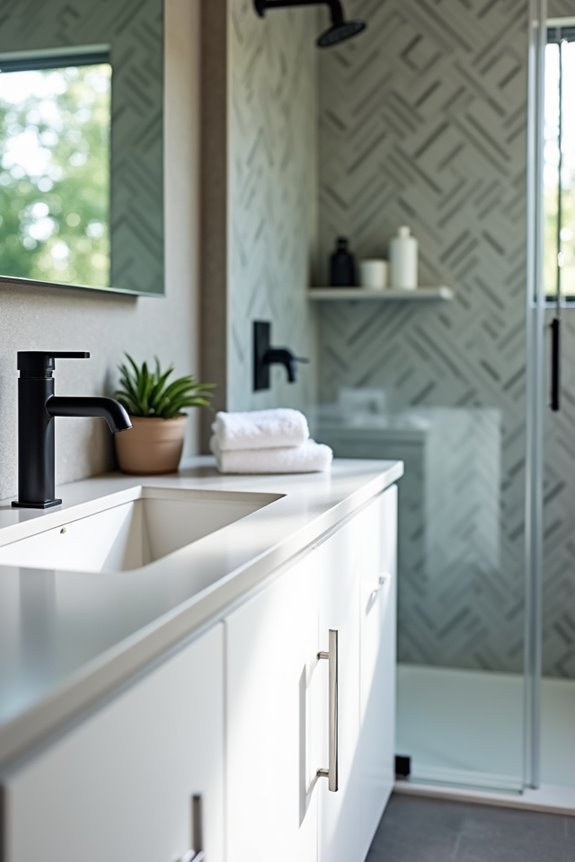
How many times have you gotten halfway through a project only to discover something that wasn’t in the original plan? I’ve learned the hard way that bathroom decoration surprises can derail your budget fast.
| Hidden Cost | Price Range | Why It Matters |
|---|---|---|
| Permits | $175–$2,000 | Location and scope vary |
| Demolition | Varies | Removing old fixtures adds up |
| Design fees | Varies | Professional consultation helps |
You’ll encounter unexpected issues like water damage or electrical problems that weren’t visible initially. Demolition expenses sneak up when you’re removing old tile or cabinetry. Permits are required in most areas. Design fees from consultants might seem optional, but they often save money long-term. I’ve found budgeting an extra 15–20% prevents stress when surprises emerge.
Budget Bathrooms: Under £7,000
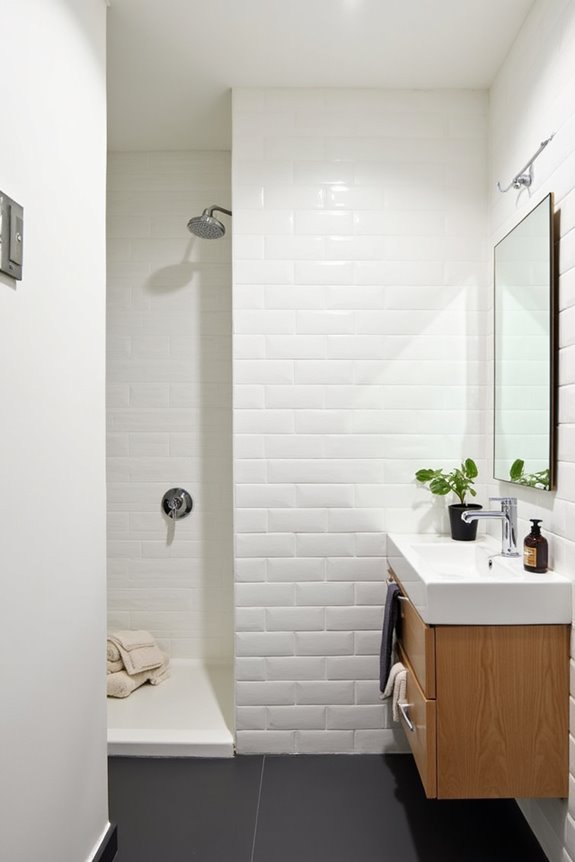
I’ve found that keeping your bathroom remodel under £7,000 comes down to two smart moves: choosing essential fixtures like new taps and showerheads instead of ripping everything out, and using budget-friendly tiles strategically rather than covering every surface. When I skip layout changes and leave the plumbing where it is, I notice how much money stays in my pocket—sometimes £2,000 or more. The real trick is deciding what actually makes your bathroom feel refreshed (fresh paint, updated fixtures, custom storage cabinets) versus what’s just nice-to-have (full tile overhauls, fancy layouts).
Essential Fixtures And Materials
When you’re working with a tight budget—let’s say under £7,000—here’s what I’ve learned: you don’t need to replace everything to make your bathroom feel fresh and functional. I’ve found that swapping out key bathroom fixtures has significant impact. New taps, showerheads, and lighting improve the space while staying cost-conscious. I typically prioritize upgrading your toilet or vanity first since they’re what you use daily. Budget tiles work well if you choose them strategically—I focus spending on visible areas. The real trick? Skip major plumbing changes and stick with cost-effective materials. Essential fittings in this cost range let me refresh the bathroom while managing expenses effectively.
Smart Cost-Saving Strategies
Why spend thousands ripping out perfectly good tiles when you can just paint over them? I’ve found that painting over existing tiles cuts both material and labor costs dramatically, making it my go-to approach for budget bathrooms.
Here’s what’s worked for me:
- Keep plumbing in place – Moving drains or water lines costs thousands, so I leave everything where it is
- Refinish instead of replace – I’ve refinished bathtubs and vanities rather than buying new ones, saving considerable money
- Choose multi-functional furniture – Smart vanities with built-in storage maximize space without expanding my budget
I also focus on fixtures and strategic updates that deliver visible results. These practical choices help me create a refreshed bathroom at a reasonable cost, and they’ve made me feel like a savvy renovator rather than overwhelmed by expenses.
Mid-Range Decoration: £7,000 to £20,000
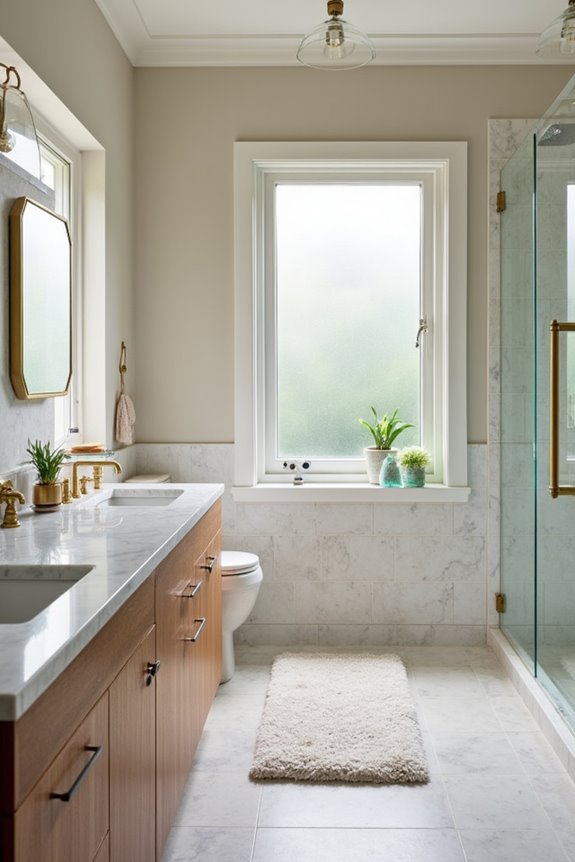
How do you create a bathroom that feels upgraded while staying within a reasonable budget? A mid-range bathroom remodel between £7,000 and £20,000 provides an excellent balance. At this price point, you can invest in quality fixtures that last for years, rather than budget options that wear out quickly. This includes upgraded vanities, stylish sinks, and reliable toilets that perform well. Tile accents offer an opportunity for creativity—custom tiles on feature walls or floors improve the overall appearance without excess. Fresh paint, new flooring, and storage cabinets complete the renovation. With a mid-range budget like this, you can have a refreshed, polished bathroom finished in two to three weeks.
Luxury Bathrooms: Premium Finishes and Custom Features
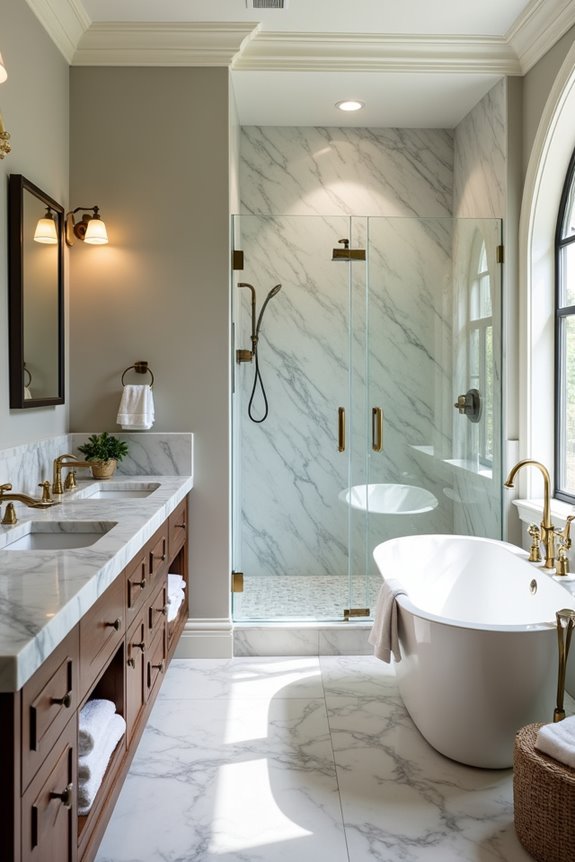
If you’ve got the budget to really go all out, a luxury bathroom renovation—typically £10,000 to £20,000 or more—creates a space that feels like a high-end spa.
The best luxury bathrooms include these key elements:
- Custom vanities and premium tiles that demonstrate intentional design choices
- Frameless glass showers and freestanding tubs that create an open, airy aesthetic
- High-end fixtures like designer taps and backlit mirrors that reflect light effectively
You’ll also want to consider heated flooring, statement lighting, and walk-in showers. Yes, these custom features increase costs, but they’re what distinguish an ordinary bathroom from one where you’d genuinely want to spend time. It’s an investment in daily luxury you’ll actually use.
Timeline: How Long Does Decoration Take?
When I’m planning a bathroom decoration project, I’ve learned that the timeline really depends on how big I’m going—small updates like paint and new lighting might take just 1–2 weeks, while medium-sized jobs with fixture upgrades and tiling can stretch to 2–3 weeks. If I’m tackling a luxury project with custom vanities and premium finishes, I’m looking at 3–6+ weeks, which honestly feels long until I realize how much detail work goes into those projects. What’s helped me most is phasing the work over time, breaking bigger jobs into stages so I’m not overwhelmed and can spread out both the timeline and my budget.
Small Bathroom Timeline Expectations
Ever wondered why your bathroom project might take two weeks instead of two days? Small bathroom remodel duration depends on what you’re actually doing. Here’s what I discovered:
- Basic refresh: 1–2 weeks for painting, fixture updates, and limited tiling
- Thorough remodel: 2–3 weeks when you’re tackling bigger changes
- Plumbing or electrical work: Add several days to your timeline
Skipping plumbing relocations keeps costs down and timelines tight. Planning ahead matters—I ordered my materials early to avoid back-ordered delays that’d wreck my schedule. The small bathroom timeline really depends on scope, but thinking through your project beforehand saves both time and money.
Medium To Large Duration
So what’s the real timeline when you’re tackling a medium to large bathroom? I’ve found that most bathroom remodels in this size range take about 2–3 weeks for a solid mid-range project. That’s assuming you’re not adding fancy custom work or premium finishes, which I learned the hard way can stretch things to 3–6 weeks.
Here’s what caught my attention: the actual renovation work is just part of the equation. Before your crew even shows up, I spent weeks planning, dealing with permits, and waiting for special orders. That’s where the real project duration sneaks up on you. For a medium to large cost range, I’d honestly budget an extra month for these prep phases alone. It beats dealing with delays later.
Phasing Work Over Time
What if you couldn’t afford to gut your entire bathroom at once? I’ve been there, and phasing renovations changed how I approached the project. Instead of draining my savings in one shot, I spread my project across several phases, which made budget planning less stressful.
Here’s how I tackled timeline management with contractor coordination:
- Phase 1: I tackled essentials like plumbing and flooring first
- Phase 2: I added fixtures and paint a few months later
- Phase 3: I invested in upgrades like radiant heating when I’d saved more
Working with my contractor, we sequenced everything strategically so trades didn’t overlap awkwardly. This approach let me manage my finances while still making real progress. You’re not compromising your vision—you’re just getting there smarter.
DIY vs. Professional: When to Hire Help
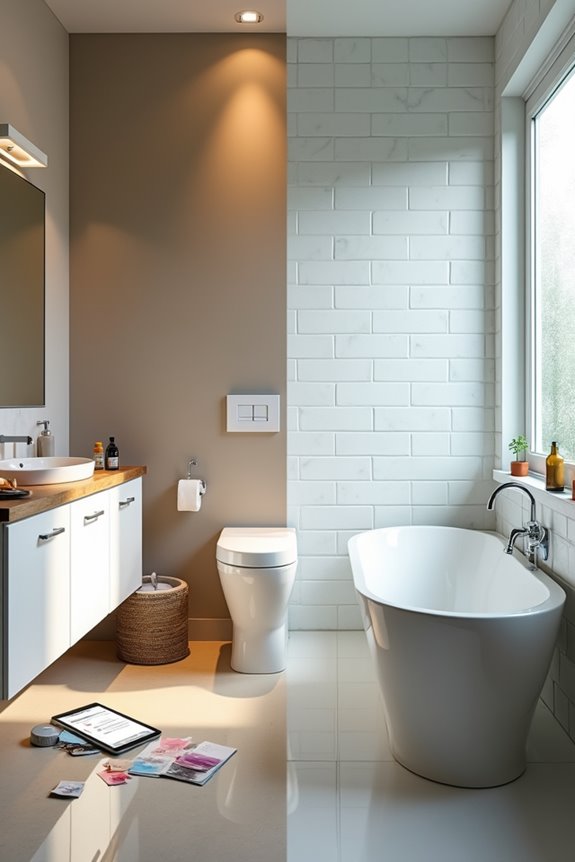
Should you tackle your bathroom remodel yourself or bring in the pros? This decision depends on your skills, budget, and timeline. Here’s how to break it down:
| Project Type | DIY Cost | Professional Cost |
|---|---|---|
| Basic cosmetic updates | $3,000–$7,000 | $7,000–$20,000 |
| Layout changes | High risk | $20,000+ |
| Luxury finishes | Mistakes costly | $30,000+ |
I handle painting and simple fixture swaps myself, but I always hire professionals for plumbing and electrical work. Those trades eat 40–65% of total costs, yet they’re worth the investment. Mistakes in hidden systems create expensive problems down the road. When I weigh DIY savings against potential code violations and rework costs, hiring pros often makes sense. Their warranty coverage and predictable timeline provide peace of mind.