I’ve learned that decorating a large living room wall doesn’t have to feel overwhelming—you just need a solid strategy that starts with one strong focal point and builds from there. Pick an oversized artwork or mirror, then use plenty of white space around it so it actually stands out. Next, choose your wall color to support that piece, layer smaller art at different heights, add shelving for texture, and use lighting to make everything pop. Balance matters too—sometimes symmetry works, sometimes breaking the rules creates more interest. Get these pieces right, and your wall goes from bare and boring to something genuinely impressive.
Start With a Focal Point to Anchor the Space
How do you tackle a wall that seems to stretch on forever? Anchoring the space with a focal point works well. Start by choosing one bold piece—an oversized artwork or large wall mirror—that immediately draws the eye and sets the scale for everything else.
Position your focal point at or slightly above seating eye level so it connects naturally with where you’re sitting. Then balance it with surrounding furnishings like a sectional or sofa, preventing the wall from feeling top-heavy. If your wall is particularly high, use negative space strategically, adding a smaller secondary accent to maintain rhythm without overwhelming the room.
This approach creates an organized expanse with a clear focal point that makes your living room feel deliberate and complete.
Choose Your Wall Color or Pattern First
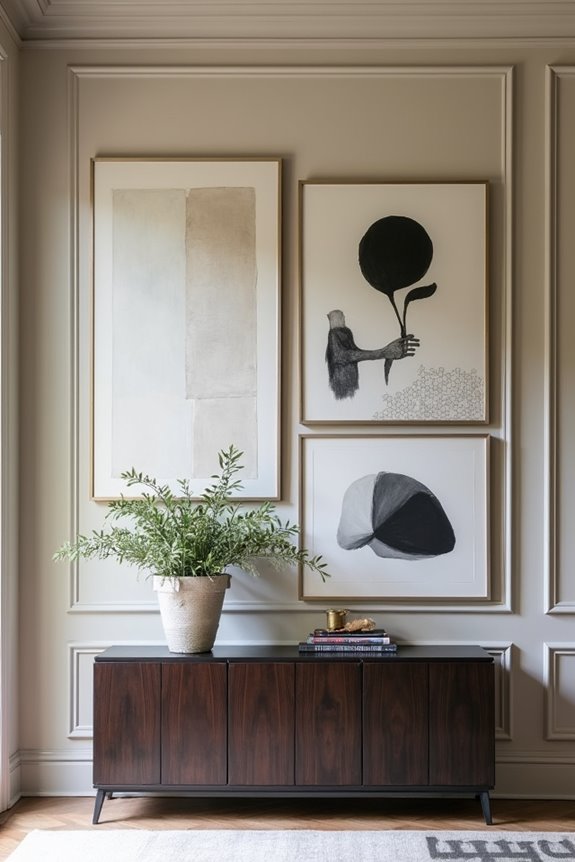
Once you’ve got your focal point locked in place, it’s time to pick the canvas it’ll live on—and that means deciding on your wall color or pattern first.
Neutral walls work well here. They let bold art and decorations stand out without competing for attention. If you prefer something bolder, an accent wall works too—just match it with your furniture’s tones so everything feels connected.
Patterns and textures add depth. Consider subtle wallpapers or textured finishes that define zones before you hang anything large.
Here’s a practical approach: grab actual paint swatches and sample boards. Stick them up and observe them throughout the day. Lighting changes everything, and you’ll want to see how your wall color interacts with your existing fabrics before you commit.
Layer Art at Varying Heights and Depths
When I started decorating my large living room wall, I realized that hanging everything at the same height made it look flat and boring, so I learned to create visual dimension by mixing frame sizes, depths, and shapes at different levels. I’d suggest starting with one anchor piece right at eye level, then strategically placing smaller works above and below it—kind of like creating a conversation between different heights. The trick to balancing scale and spacing is leaving plenty of breathing room between each piece so nothing feels crammed together, which honestly took me a few failed attempts to figure out.
Creating Visual Dimension
To fill a blank wall with something worth looking at, I’ve found that layering art at different heights works as a foundation. You’re creating vertical movement that makes your wall feel active, not just decorated.
Here’s what I do:
- Mix shallow frames with 3D pieces like wall-mounted sculptures or reliefs to build actual depth
- Arrange items in staggered groupings—think one large central piece with smaller works positioned at different altitudes around it
- Combine contrasting frames and textures using glass, wood, and fabric for visual interest
- Position lighting strategically so shadows fall across your arrangement, enhancing dimension
When you layer thoughtfully, you’re not just filling space. You’re creating rhythm and visual dimension that makes people notice what you’ve done. That’s what I’m consistently aiming for.
Balancing Scale And Spacing
How do you fill a massive wall without making it look like you just threw everything up there? I’ve learned that a staggered gallery approach works. Instead of centering everything, I cluster pieces with intentional gaps between them, which sounds counterintuitive but actually feels balanced.
Here’s my strategy: I anchor the display with a large piece at eye level—this gives my large wall a clear starting point. Then I layer art at varying heights, placing smaller works above and below that piece. I also mix depths by combining flat framed pieces with three-dimensional objects like plates or baskets.
This scale harmony prevents my wall decor ideas from feeling overwhelming. The varied spacing lets each piece breathe while maintaining cohesion across my gallery wall.
Know When to Balance or Break the Rules
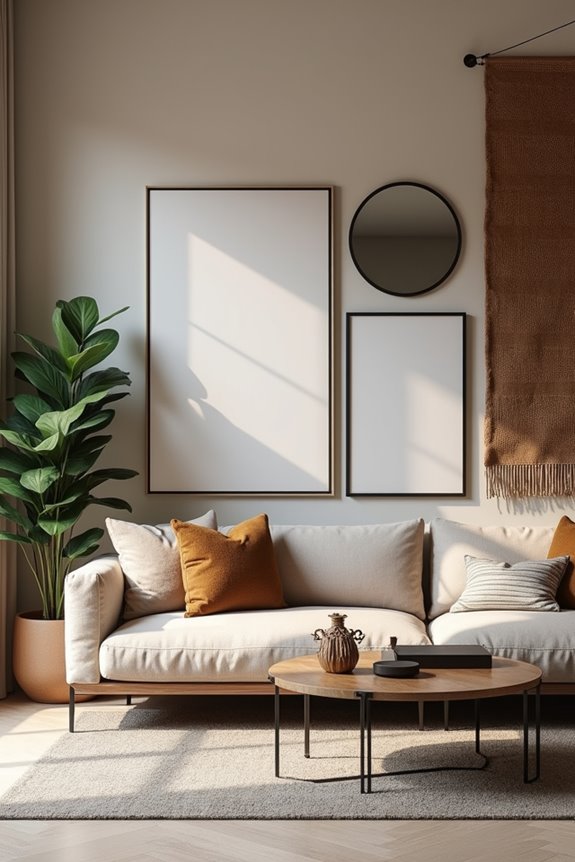
I’ve learned that you don’t always need perfect symmetry to make a large wall look good—sometimes breaking the rules actually works better. When I arrange pieces asymmetrically, I make sure to repeat similar colors or shapes elsewhere on the wall so everything still feels connected, not random. The trick is knowing whether your space needs the calm of matching pairs or the personality that comes from an intentional, off-center layout.
Symmetry Versus Strategic Asymmetry
When should you center that art piece, and when should you deliberately throw it off to one side? It depends on what anchors your room.
Here’s what works:
- Large focal points (think massive sofas or fireplaces) need symmetry to feel intentional and grounded
- Offset seating calls for asymmetry to avoid awkward empty spaces
- Smaller pieces benefit from intentional 6–12 inch offsets paired with taller elements like sculptures
- Rhythm matters—repeat shapes or colors across uneven placements to maintain visual weight
The approach: Align major wall art with your seating orientation first. Then break the rules deliberately. Pair off-center pieces with contrasting heights to draw the eye naturally. Strategic asymmetry isn’t chaotic; it’s calculated balance through visual contrast.
Breaking Traditional Placement Rules
When you stop centering everything and start playing with placement instead, walls become more visually interesting. Ditching rigid symmetry for dynamic asymmetry creates a different kind of balance.
Here’s what works about breaking traditional rules:
| Technique | How It Works |
|---|---|
| Off-center art | Pair smaller pieces with bold, large prints for visual balance |
| Scale variation | Mix different sizes to create visual interest and depth |
| Wall lighting | Add sconces or picture lights to anchor off-center displays |
| Negative space | Leave breathing room around groupings for visual harmony |
The key is maintaining rhythm through repeating colors or frames so the arrangement stays cohesive. Wall lighting anchors scattered displays and keeps them organized. Negative space serves a purpose—it’s what allows asymmetry to work effectively.
Install Wall Shelving to Display Decor
How’d you like to fill that blank wall with shelving that actually displays what matters to you? Whether you choose floating shelves flanking your TV or open shelves across the whole space, you’ve got options that’ll make your room feel like *yours*.
Fill that blank wall with shelving that displays what matters to you and makes your room feel like yours.
Here’s what works:
- Mix shelf depths and heights to create visual rhythm
- Group display decor in odd numbers (3–5 items) for balance
- Combine materials like wood, metal, and glass for texture
- Rotate items seasonally to keep things fresh
Shelving units become your room’s personality showcase. I love how they let me display books, plants, and keepsakes without feeling cramped. The lightweight, open look keeps your space feeling airy while giving you real storage. That’s the sweet spot.
Use Lighting to Enhance Your Wall Display
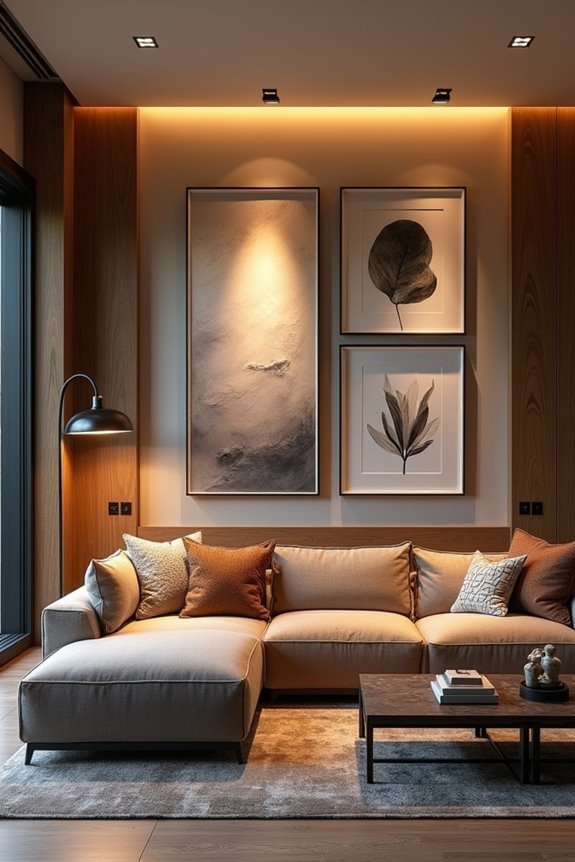
I’ve learned that lighting affects everything. I use a combination of picture lights, sconces, and track lighting to create layered illumination across my large living room wall. This approach highlights my focal pieces without creating weird shadows that make visitors squint.
Here’s what works: position your lights to match where people actually sit, so the wall display catches light naturally from their viewpoint. I installed dimmable options too—they’re useful for shifting the mood depending on whether I’m hosting or relaxing solo.
Don’t forget about daylight. I balance warm and cool color temperatures throughout the day, letting natural light work with my fixtures rather than against them. The right lighting makes your wall display visible and effective.
Balance Negative Space With Your Design
When you’re filling a large wall, it’s easy to panic and cover every inch—I’ve been there. Negative space works. It’s not empty; it’s intentional breathing room that supports your design.
Negative space isn’t empty—it’s intentional breathing room that supports your design and makes rooms feel bigger and calmer.
Here’s what works:
- Leave plenty of white space around one oversized artwork so it becomes the focal point
- Space gallery wall pieces consistently to create rhythm without crowding
- Let your large wall decor breathe by resisting the urge to fill gaps
- Balance a statement piece with a single wall sconce for visual interest
When I stopped obsessing over covering everything, my rooms actually felt bigger and calmer. That empty space does the work. Your eye needs somewhere to rest, and that’s where the real impact happens.