
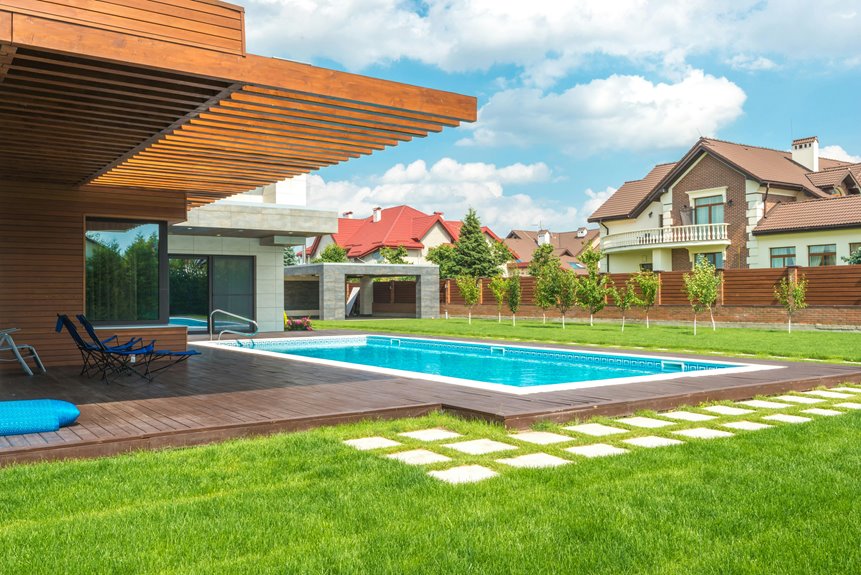
Backyard renovations absolutely can pay off—I’ve seen landscaping deliver up to 80% ROI and outdoor kitchens recover 55% to 200% of costs.
But here’s the thing: your neighborhood’s the real boss. Upgrades that work in one area might flop in another.
Smart moves like fresh mulch, edging, and lighting give you quick wins at reasonable cost.
The trick’s matching your upgrades to what local buyers actually want, not chasing every trend.
Stick around to discover which projects genuinely move the needle.
How Much Value Do Backyard Renovations Actually Add?
Ever wonder if sprucing up your backyard is actually worth the money? I did too, so I looked into the numbers. Here’s what I found: landscaping can deliver up to 80% ROI when done right, which caught my attention. Outdoor living spaces like patios and outdoor kitchens? They’re even better, recouping 55% to 200% of costs. Pools add roughly $30,000–$95,000 to resale value in good markets. The real advantage? Well-designed grounds with mature trees can hit around 352% ROI for smaller yards. Plus, landscaped properties in competitive markets show 5.5% to 12.7% higher long-term value. I’m convinced that investing in your backyard isn’t just about enjoying it now—it’s smart financial thinking too.
Why Your Neighborhood Determines What Pays Off
If you’re thinking about dropping $50,000 on a backyard pool when your neighbors’ homes max out at $30,000 in outdoor upgrades, I’ve got some honest news for you—that extra investment probably won’t pay off. Your neighborhood sets the ceiling for what buyers will actually pay, so I’ve learned the hard way that matching what similar homes around you offer (think patios, landscaping, decent decking) matters way more than going overboard. The trick is figuring out what your local comps have, then investing at that same level to stay competitive without overshooting.
Market Norms Drive Value
Why does your neighbor’s fancy pool add way more to your home’s value than yours might to yours? It’s all about market norms. I learned this the hard way—I nearly splurged on premium landscaping before realizing my comps told a different story.
Here’s what I discovered: appraisers focus on what nearby homes actually offer, not what *could* be possible. Your outdoor renovations should match your neighborhood’s standard, not exceed it wildly. When I aligned my backyard improvements with local expectations, my ROI finally made sense.
Think of it this way: that 5.5% to 12.7% value boost from landscaping? It happens when you’re keeping pace with your street. Going overboard beyond neighborhood norms? You’re probably throwing money away. Your comps are your roadmap.
Overspending Beyond Neighbors Backfires
What happens when you sink $50,000 into a dream backyard while your neighbors’ yards top out at $15,000? You’re likely throwing money away. I learned this the hard way. When I overspent on fancy landscaping and premium materials beyond neighborhood benchmarks, my home’s appraisal didn’t budge. Appraisers care about condition and livable space, not luxury excess.
Your ROI depends on matching what surrounds you. If your neighbors have basic decking and modest landscaping, that high-end patio won’t return its investment. I’ve discovered that neighborhood norms set the ceiling for what buyers expect—and what they’ll pay.
The smart move? Check what similar homes feature, then match that level. You’ll boost your property’s value without pricing yourself out of your own market.
Upgrades Match Local Competition
Ever notice how the best-looking backyard on your block suddenly feels ordinary once you drive around the neighborhood?
I learned this the hard way. Your front-yard-backyard upgrades need to match what local comps are actually offering. Here’s what I discovered matters most:
- Check what neighbors have—pools, patios, landscaping—before you spend
- Align your outdoor upgrades with market expectations in your area
- Understand that ROI depends on fitting in, not standing out wildly
- Balance front and back improvements to match neighborhood standards
In high-end areas, missing key features can hurt your home’s value relative to nearby properties. But overspending beyond what neighbors offer? That won’t generate returns. Your best strategy is studying local competition first, then planning upgrades that feel natural for your community. That’s how you actually get your money back.
5 Backyard Projects With The Strongest ROI
I’ve tested five backyard projects that’ll actually move the needle on your home’s value: landscaping and garden design, outdoor kitchens and fire pits, decks, patios, and fencing. Each one’s got a different payoff depending on your neighborhood and how much you’re willing to spend, so I’ll break down what I’ve learned about which ones’ll give you the best bang for your buck. Let’s look at each project and see which ones’ll matter most to buyers evaluating your backyard.
Landscaping And Garden Design
Why’s landscaping often the first thing I notice when I pull up to a house? It’s the curb appeal that hooks me instantly. I’ve learned that smart landscaping delivers serious ROI—up to 80% according to realtors I’ve talked to.
Here’s what I’ve found works best for outdoor living spaces:
- Native plants that thrive without constant fussing
- Medium-sized trees for shade and character
- Flowering shrubs that pop with color
- Tidy grass areas that frame everything nicely
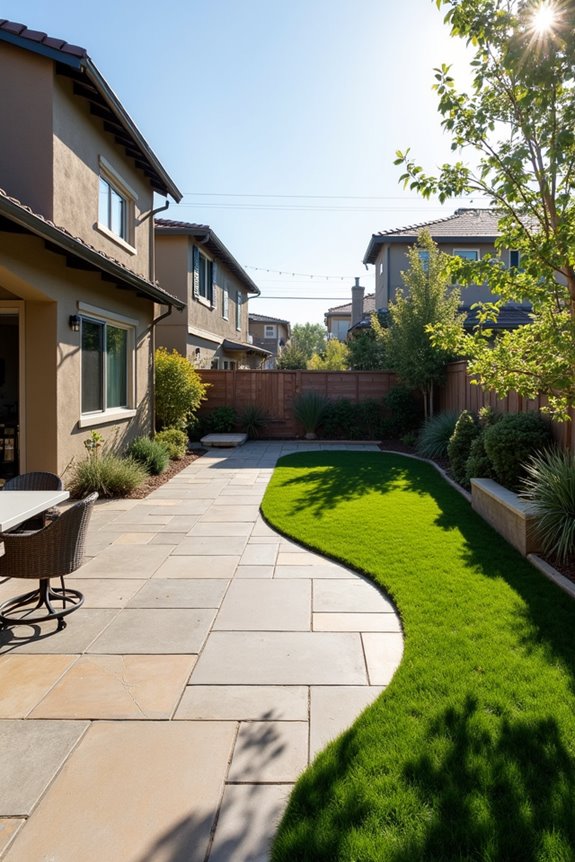
Water-wise native plants paired with clean borders kept my maintenance low while buyers loved the look. Well-maintained grass alone yielded up to 352% ROI in smaller backyards. Honestly, I wasn’t expecting those numbers. Landscaping changed how people saw my space—and what they’d pay for it.
Outdoor Kitchens And Fire Pits
After I’d nailed down my landscaping, I realized the real money was waiting in outdoor kitchens and fire pits—the features that actually get people excited. I’m talking about the stuff that makes neighbors jealous.
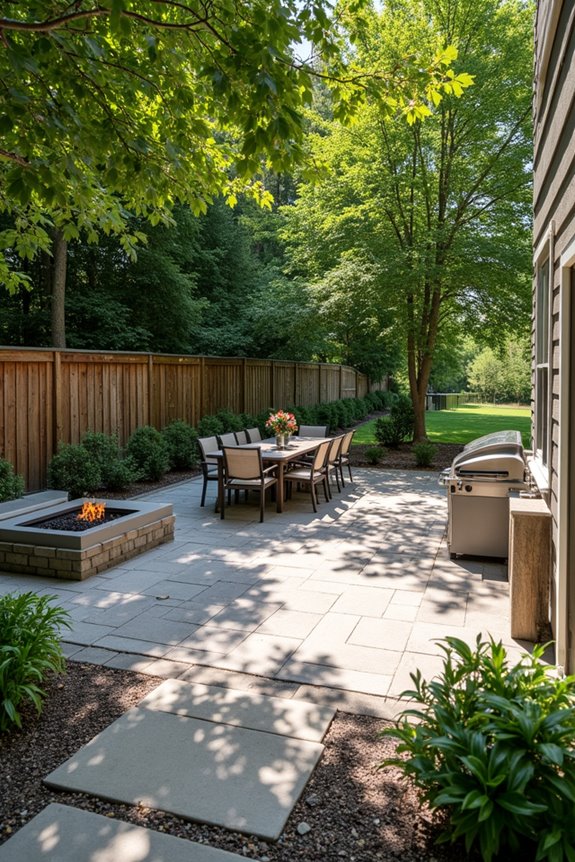
An outdoor kitchen with a built-in grill, sink, and compact fridge extends your living space and boosts home value by about 3.1%. You’ll recoup 55% to 200% of your investment. Add a gas fire pit—which recovers up to 70% of costs—and you’ve created the ultimate entertaining spot.
Here’s my honest take: prioritize durability. Choose weather-resistant countertops and a quality inset grill. Low-maintenance components mean less headache later.
The real appeal? These features work together. Buyers crave multi-use spaces for gathering. If you’re staying a few years, this ROI combo is worth the investment.
Decks, Patios, And Fencing
When you’re ready to move beyond the kitchen and fire pit, here’s where the real backbone of your backyard comes in: decks, patios, and fencing.
I’ve learned these three elements seriously boost your outdoor living spaces and ROI. Here’s what I discovered:
- Wood decks recoup about 83% of costs—nearly unbeatable returns
- Composite decks recover around 68%, still solid for durability lovers
- Patios (concrete or pavers) offer 60–70% cost recovery plus appraisal bump
- Privacy fences add roughly $5,000 in value, enhancing safety and appeal
When you combine these strategically, you’re not just expanding usable space. You’re creating the outdoor living experience buyers want. I found that thoughtful combinations maximize both function and visual appeal, making your backyard genuinely work for your lifestyle—and your home’s value.
Which Popular Features Don’t Return On Investment?
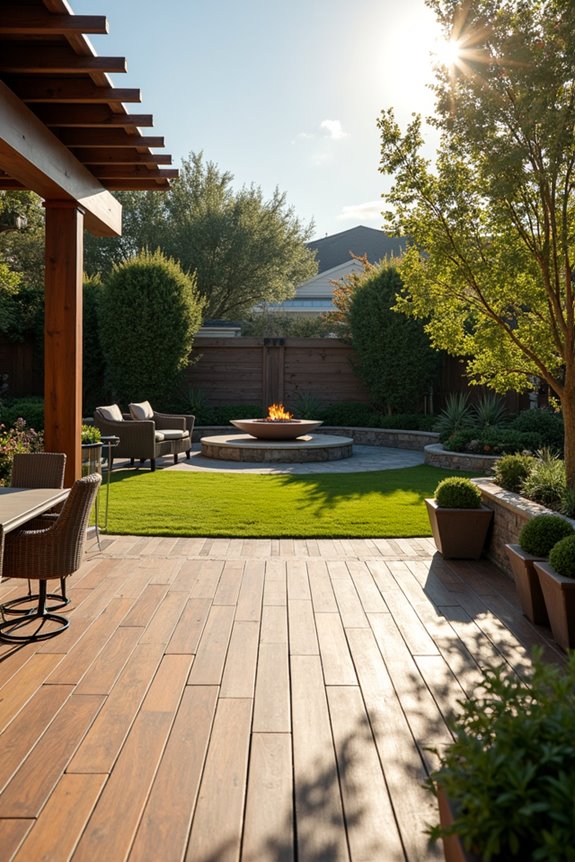
Which Popular Features Don’t Return On Investment?
Just because a backyard feature is popular doesn’t mean it’ll pay you back when you sell. I’ve seen homeowners invest significant money into features that appraisers barely acknowledge.
| Feature | ROI Reality |
|---|---|
| Pools | $30K-$95K return (incomplete cost recovery) |
| High-maintenance materials | Don’t guarantee higher value |
| Artificial turf | Mixed results with durability concerns |
| Concrete patios | Strong ROI when maintained; costly if damaged |
| Landscaping | Up to 80% ROI potential |
Pools typically increase resale value, but they won’t fully cover construction and maintenance costs. High-maintenance luxury materials disappoint me most—appraisers care about durability, not expense. Artificial turf sounds smart until buyers worry about heat and drainage issues. Concrete patios crack and discolor, making replacement pricey.
The reality: landscaping and multi-function outdoor spaces deliver better returns than single luxury features. I’m focusing on what lasts and feels welcoming to everyone.
Budget-Friendly Upgrades That Deliver Big Returns
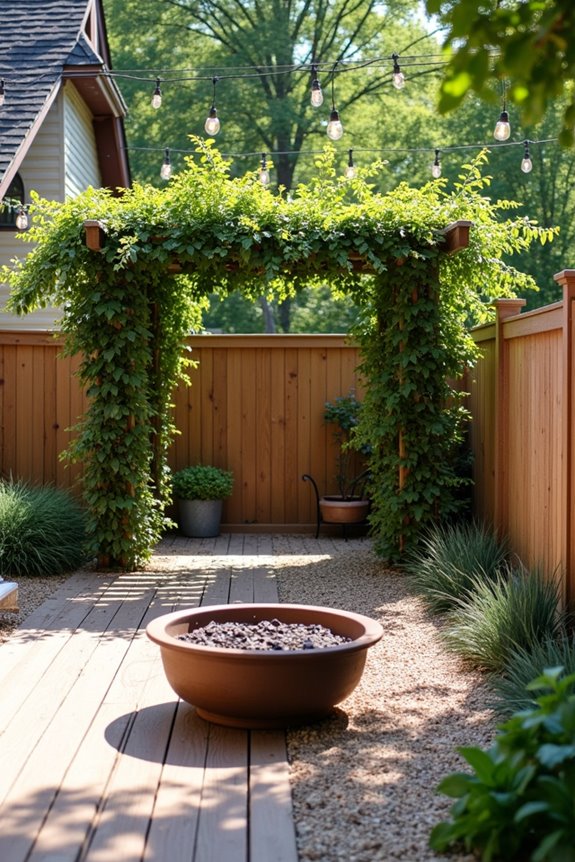
I’ve learned that you don’t need much money to improve your backyard for buyers, so let me share what works: simple lawn care, strategic lighting, and smart staging with mulch and edging. A freshly mowed lawn with crisp mulch borders around your flower beds costs little but makes your yard look well-maintained, while soft outdoor lighting at dusk creates an inviting atmosphere that lets people envision themselves relaxing there. These budget-conscious tweaks—the basics executed well—are what I’ve seen have the biggest impact on how potential buyers view your outdoor space.
Simple Lawn Care Essentials
Why does a freshly edged flower bed feel like such a breakthrough? I’ve discovered that simple lawn maintenance improves your curb appeal at reasonable cost.
Here’s what I’ve learned works:
- Edging and mulch – Fresh mulch around beds makes everything pop instantly
- Regular mowing – Crisp, clean grass is your foundation for everything else
- Hedge trimming – Overgrown bushes drag down your whole yard’s appearance
- Sprinkler repairs – Working irrigation keeps your lawn healthy long-term
I’ll be honest: these tasks aren’t glamorous. But they’re effective. When I tackle edging and refresh my mulch, my neighbors actually notice. These affordable upgrades deliver real value when combined with general upkeep. You’re investing in lawn appearance that pays real dividends.
Inexpensive Lighting And Ambiance
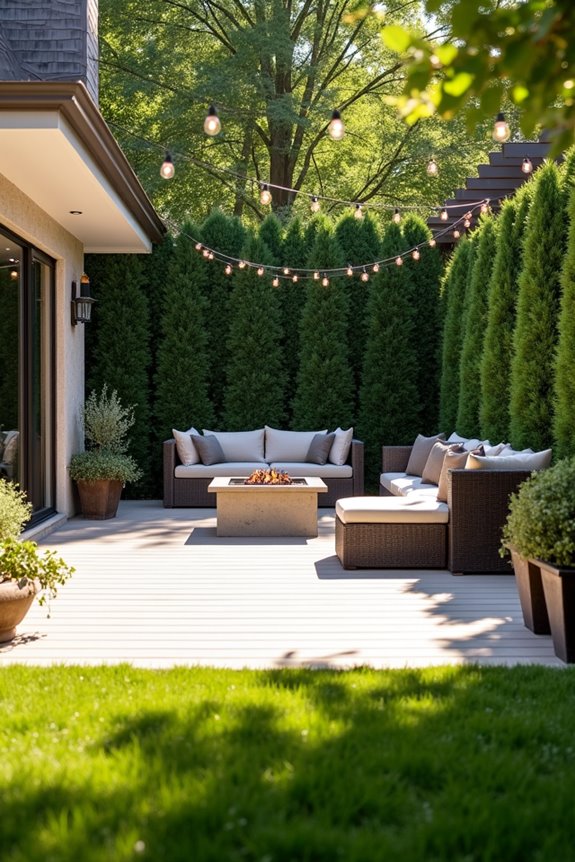
Once you’ve got your lawn looking sharp with fresh mulch and clean edges, lighting creates visual interest after dark. Bistro lights and simple uplighting work well on a modest budget and shift your yard’s overall appearance. String lights overhead provide ambiance for evening gatherings, while path lighting guides guests naturally through your space. These affordable lighting upgrades highlight focal plants and architectural features, improving your curb appeal. Home buyers notice well-designed outdoor lighting—it signals care and investment. I’ve paired inexpensive fixtures with consistent maintenance routines to maximize my return without overspending. Your outdoor lighting doesn’t need to be elaborate; it just needs to work strategically and look deliberate.
Mulch, Edging, And Staging
Fresh mulch and clean borders might sound unglamorous, but they’re honestly the quickest way to improve your yard on a modest budget. I’ve seen how these simple touches boost curb appeal, and the ROI speaks for itself—landscaping upgrades often add over $9,000 in home value.
Here’s what I’d tackle first:
- Spread fresh mulch around beds to create neat, defined spaces
- Install clean edging to separate lawn from garden areas
- Stage a fire pit seating area for family gatherings
- Clear dead plants and trim overgrown hedges
When I combined these budget-friendly moves, my yard looked noticeably different. The staging created that welcoming vibe buyers want, while the mulch and edging gave everything polish. You’re not just improving aesthetics—you’re creating spaces where families can picture themselves living.
Backyard Renovation Red Flags That Tank Home Value
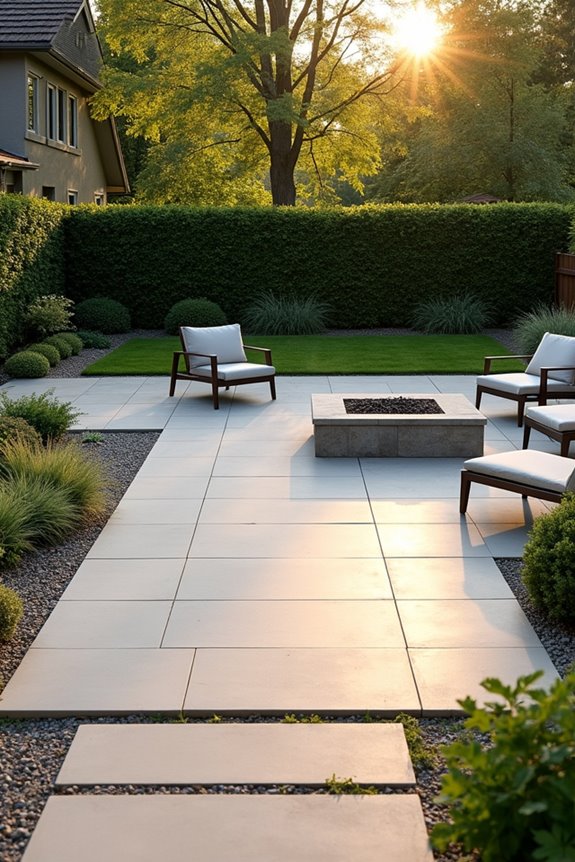
How’d you like to spend thousands of dollars on your backyard, only to watch potential buyers walk right past it?
Spend thousands on your backyard only to watch potential buyers walk right past it?
I’ve learned the hard way that certain renovation mistakes can reduce your home’s value faster than you’d expect. Unpermitted work? Buyers will demand corrections before closing, costing you significantly. Overbuilding fancy features beyond what your neighbors have installed signals poor judgment and creates an ROI failure. High-end pools become maintenance burdens that drain your wallet annually.
Here’s what really hurts your property’s appeal: visible neglect like cracked concrete, weeds, or faded decking. These red flags make buyers question what else you’ve ignored. Single-function luxuries without practical planning waste money and space.
The bottom line? Stick with smart, multifunctional upgrades that match your neighborhood. Your wallet—and future buyers—will appreciate it.
The Hidden Costs of DIY Projects and Unpermitted Work
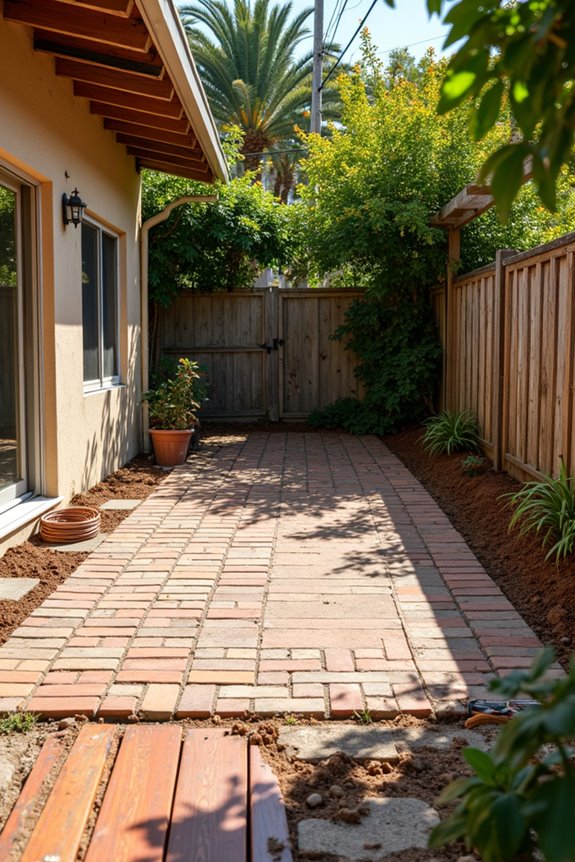
When I decided to build a deck myself to save a few thousand dollars, I didn’t think about what would happen when I sold my house. Here’s what I learned the hard way:
- Unpermitted work requires removal – My buyer’s inspector flagged it, forcing me to tear down my deck before closing
- Appraisers ignore premium materials – My expensive wood didn’t add the value I expected because execution looked sloppy
- ROI takes a hit – I lost money after accounting for removal costs and delayed sale
- Contractor oversight prevents headaches – Professional permitting and building codes protect your investment long-term
I’ve learned that DIY projects work fine for small stuff, but major constructions need licensed professionals. That contractor oversight? It’s not just bureaucracy—it’s protecting your home’s resale value and your peace of mind.
Matching Your Budget and Timeline to High-ROI Projects
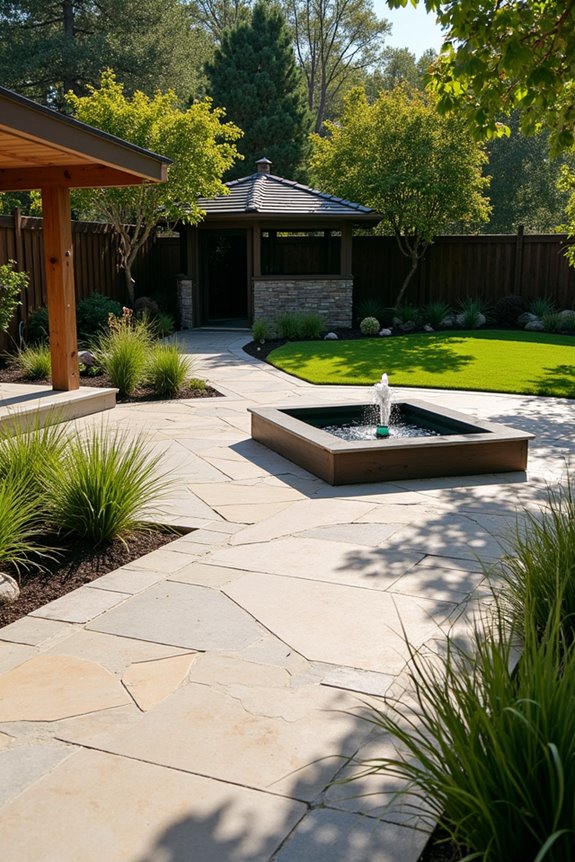
What’s the difference between a backyard upgrade that pays for itself and one that drains your wallet? It’s matching your budget to projects with proven landscaping ROI.
I’ve learned that starting small matters. Simple improvements like fresh mulch and lawn maintenance boost curb appeal at a reasonable cost. Then I can tackle bigger wins.
| Project | Cost | ROI % |
|---|---|---|
| Landscaping | $2,000–$5,000 | 80% |
| Concrete Patio | $3,000–$8,000 | 65% |
| Outdoor Decks | $4,000–$10,000 | 70% |
| Multi-use Spaces | $5,000–$15,000 | 75% |
| Single Features | $6,000–$12,000 | 40% |
Multi-use outdoor spaces—patios plus seating and fire pits—deliver stronger returns than single-function luxuries. I compare my neighborhood’s comps to avoid overbuilding. Cost recovery matters more than flashy features.
Beyond Resale: Long-Term Backyard Renovation Value
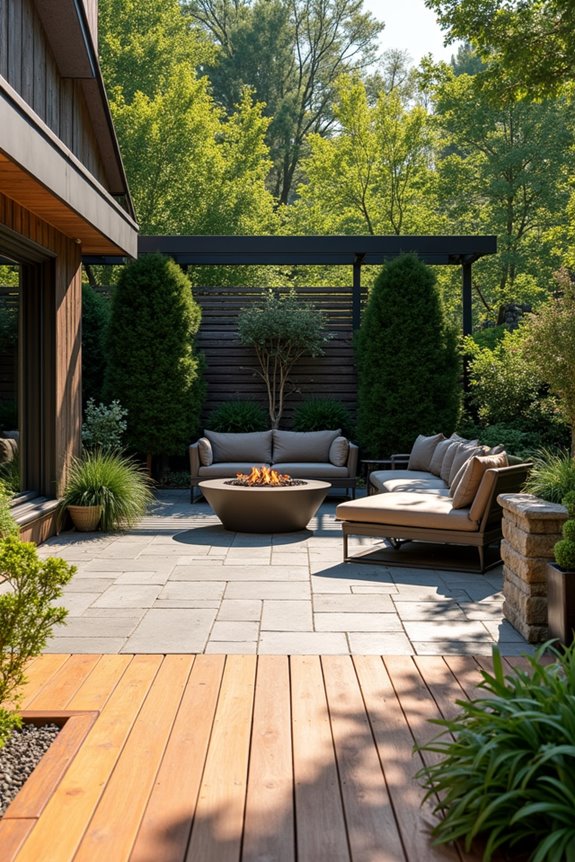
Beyond resale value, I’ve discovered that backyard renovations deliver something more meaningful: they shape how my family actually lives. Here’s what I’ve learned matters most:
- Landscaping projects boost long-term ROI beyond what you’d get selling the house
- Mature trees add roughly 15% value while providing shade and memories
- Well-maintained outdoor spaces keep delivering usability for years after completion
- Outdoor value compounds as real estate acts like inflation protection
I stopped obsessing over resale numbers and started prioritizing what we’d actually enjoy. That mature fruit tree isn’t just an investment—it’s where my kids build memories. The renovated patio becomes our gathering spot. Real estate acts as a hedge during inflation, yes, but honestly? The everyday joy of a thoughtfully renovated backyard outweighs any appraisal report.
Renovate Now or Wait? Timing Your Backyard Investment
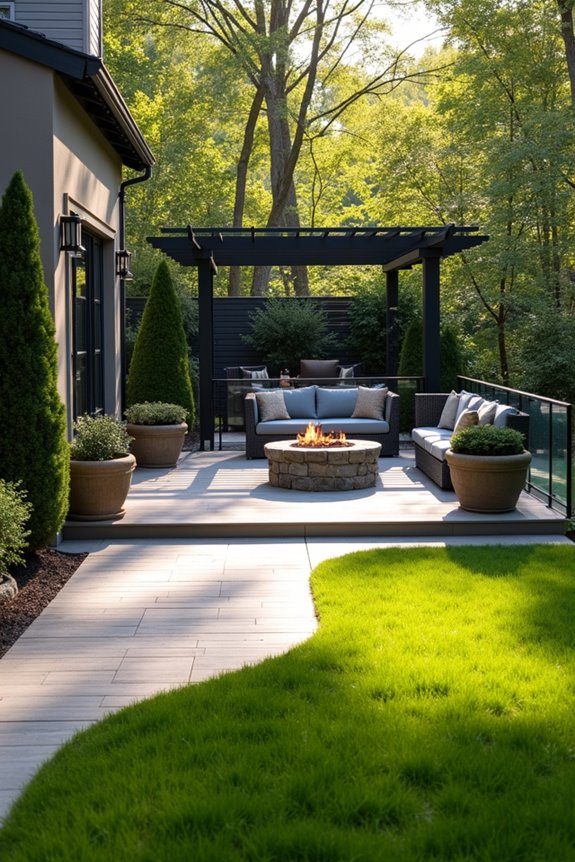
Should you start digging into that backyard project this spring, or hold off another year? I’ve wrestled with this question myself. Here’s what I’ve learned: timing matters for your ROI and resale value.
If outdoor spaces are hot in your market right now, I’d lean toward acting soon. Popular renovations like decks and fire pits sell faster and command higher premiums. That said, inflation’s creeping up on costs, so waiting could mean paying more later.
I’ve found a staged approach works best. Start with simple, low-cost improvements that deliver quick wins. Then plan bigger renovations for later. This balances your enjoyment today with smart resale strategy tomorrow.
The truth? You’ll probably regret waiting more than you’d regret starting.